
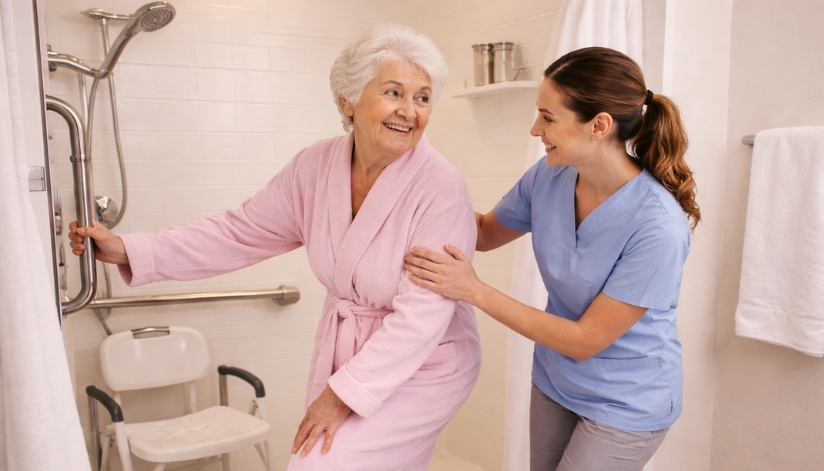
Bath Safety Month: Practical Tips To Prevent Slips And Falls
January is Bath Safety Month, a timely reminder that one of the most common places for senior injuries is also one of the most familiar places: the bathroom. A warm shower can be soothing in the middle of a Wisconsin winter. A relaxing bath can help ease sore joints and improve sleep. But for older adults, bathrooms also present serious safety risks. Wet floors, tight spaces, and quick temperature changes create the perfect conditions for slips, falls, and burns.
At The Neighbors of Dunn County, resident safety is always at the center of everything we do. Our neighborhood-style campus was designed to feel like home while still offering the support, supervision, and resources older adults may need. Bath Safety Month is a great opportunity to share simple, practical ways to reduce bathroom hazards and keep seniors safe, whether they live at home, in assisted living, or in skilled nursing care.
This post is written for residents, families, and community members who want to make bathing safer and more comfortable for older adults. It also reflects the ongoing commitment The Neighbors brings to resident-directed care and a warm, secure environment.
Why Bath Safety Matters For Seniors
Falls are a leading cause of injury for older adults, and many falls happen in the bathroom. It makes sense when you think about it. Bathrooms are full of hard surfaces. They often require stepping over tub edges or shifting weight while getting dressed. Water makes floors slick. Steam can reduce visibility. Even reaching for towels or toiletries can throw off balance.
A fall is not always “just a fall” for a senior. It can lead to broken bones, head injuries, hospital stays, and long recovery periods. It can also affect confidence. After a fall, many older adults become more hesitant to move around independently. They may avoid bathing, walking without assistance, or doing other activities that support health and quality of life.
Bath Safety Month matters because it encourages prevention. Many bathroom risks can be reduced with small changes. The goal is not to take away independence. It is to support safe independence.
Common Bathroom Risks For Older Adults
Before talking about solutions, it helps to know the most common hazards.
Slippery Surfaces
Water on tile, linoleum, and even sealed vinyl floors can create a slick surface. Bathmats can help, but only if they have non-slip backing and are placed correctly.
Stepping Into Or Out Of The Tub Or Shower
Lifting a leg over the tub wall can be difficult for someone with limited mobility, stiffness, or balance issues. Even a small misstep can cause a fall.
Standing Too Long
Showering requires standing, turning, and shifting weight. Seniors with weakness, low blood pressure, or dizziness can lose stability quickly.
Poor Lighting
Many bathrooms have dim lighting, especially at night. Shadows can hide water, clutter, or edges.
Burn Risks
As skin becomes thinner with age, seniors are more vulnerable to burns. Hot water that feels comfortable to one person may be too hot for an older adult. Some seniors also have reduced sensation in their hands or feet.
Clutter And Trip Hazards
Laundry baskets, small rugs, raised thresholds, cords, and even toilet paper rolls on the floor can create trip hazards.
Rushing
Many falls happen when a person feels rushed, whether due to urgency to use the bathroom, fear of needing help, or anxiety about someone waiting outside the door.
Bath Safety Tips
Bath Safety is about small improvements that reduce risk without making life feel restrictive. These tips can support safety in nearly any setting.
Add Grab Bars In The Right Locations
Grab bars are one of the most effective safety tools in a bathroom. They provide stable support when stepping in and out of the shower, lowering onto the toilet, or standing up. The key is placement and installation. Grab bars should be anchored into wall studs, not suction-cup devices that can slip.
Helpful places for grab bars include:
- Near the toilet
- Inside the shower or tub
- At the shower entrance
Use Non-Slip Surfaces
A non-slip bathmat inside the tub or shower is a must. Also consider a non-slip mat outside the shower to catch dripping water. If using rugs, choose ones with a strong non-slip backing and avoid rugs that curl at the edges.
A good rule: if it moves when you nudge it with your foot, it is not safe.
Consider A Shower Chair Or Bench
A shower chair can reduce fall risk by allowing the person to sit while bathing. This is especially important for seniors with fatigue, weakness, poor balance, or dizziness. A shower bench can also help with transfers in and out of the tub.
This is not just for people with major mobility challenges. Many seniors benefit from sitting for part of the shower to reduce strain.
Use A Handheld Showerhead
A handheld showerhead makes bathing easier and safer, especially when combined with a shower chair. It reduces the need to twist and reach. It can also make it easier for caregivers or staff to assist while respecting dignity.
Improve Bathroom Lighting
Bright, even lighting reduces shadows and helps seniors see wet floors or obstacles. Night lights are also helpful for late-night bathroom trips. Motion-sensor lights can be a great solution, especially for someone who wakes up frequently.
Keep Essentials Within Easy Reach
Reaching, bending, or stretching can cause loss of balance. Keep soap, shampoo, towels, and toiletry items within easy reach. Consider using a shower caddy or wall-mounted dispensers.
The goal is to reduce “extra movements” that increase risk.
Manage Water Temperature
Hot water burns can happen quickly. If possible, set the home water heater to a safer temperature. Many experts recommend around 120°F for older adults. Anti-scald devices can also help, especially in homes where multiple people share the water heater.
Encourage seniors to test the water with a hand or forearm before stepping in, and to avoid making temperature changes quickly while standing.
Wear Proper Footwear
If an older adult feels unsteady, shower shoes with non-slip soles may help, as long as they fit correctly and do not create tripping risk. For walking in the bathroom, non-slip socks or supportive footwear can reduce slips compared to smooth socks or bare feet on tile.
Keep The Floor Clear And Dry
This sounds obvious, but it is one of the most important habits. Wipe up water right away. Keep laundry baskets out of the walking path. Avoid using multiple small rugs. Remove clutter. Make sure cords are not running across the floor.
One simple habit: place a towel on a safe mat outside the shower and use it to dry feet before stepping onto the floor.
Slow Down And Create A Routine
Bathing should never feel rushed. Encourage older adults to take their time and follow a consistent routine. That routine can include sitting down to dry off before standing, keeping a phone or call button nearby, and asking for help if needed.
For seniors who live alone, it may be helpful to bathe at a time when someone can check in afterward.
Bath Safety For Seniors With Memory Loss
Bathing can be especially challenging for older adults with dementia or cognitive impairment. Confusion, fear, or resistance can increase fall risk. In these cases, the environment and approach matter just as much as the equipment.
Helpful strategies may include:
- Keeping the bathroom warm to reduce discomfort
- Using a consistent bathing schedule
- Playing calming music
- Offering simple choices, such as “Would you like your bath now or after breakfast?”
- Using clear, calm directions
- Ensuring strong supervision and assistance when needed
At The Neighbors of Dunn County, our team understands that safety and dignity go together. Our staff approach bathing with patience, respect, and individualized support.
How The Neighbors Supports Bath Safety Month All Year
Bath Safety Month is a great reminder, but at The Neighbors, bathroom safety is part of everyday care. Our staff are trained to support residents with mobility, transfers, and personal care needs in a way that protects independence whenever possible.
Depending on a resident’s care plan, support may include:
- Assistance with showering or bathing
- Supervised bathroom routines
- Safe transfer techniques
- Monitoring for dizziness or weakness
- Adaptive equipment for comfort and safety
- Regular maintenance and environment checks
We also recognize that safety needs change over time. A resident who was steady last year may need more support after an illness, a medication change, or a fall. We adjust care plans to support the individual, not a one-size-fits-all model.
Bath Safety Month Tips For Families And Caregivers
If you are supporting a loved one at home, Bath Safety Month is a good time to do a quick bathroom safety check.
Ask yourself:
- Is there a grab bar near the toilet and in the shower?
- Is there a non-slip mat inside and outside the shower?
- Is the lighting bright and easy to use?
- Are toiletries within reach?
- Are rugs secure and non-slip?
- Is the floor clear of clutter?
- Does my loved one feel dizzy when standing?
- Have there been any recent near-falls or slips?
You can also talk to a healthcare provider about fall risk factors like medication side effects, low blood pressure, poor vision, neuropathy, or muscle weakness. Sometimes the bathroom is where the problem shows up first.
The Emotional Side Of Bath Safety
Bathing is personal. Many seniors value privacy and independence in the bathroom more than almost anywhere else. That is why safety conversations should be respectful and supportive, not alarming or controlling.
Instead of saying “You can’t do this anymore,” it may help to say:
- “Let’s make this safer so you can keep doing it comfortably.”
- “I want you to feel steady and confident.”
- “These small changes can help you avoid a bad slip.”
The best bath safety plans protect independence and dignity.
A Warm And Safe January At The Neighbors
Wisconsin winters can be tough, but they also bring a chance to slow down, stay warm, and focus on what matters. Bath Safety Month is one more way The Neighbors of Dunn County supports residents and families through seasonal safety concerns.
If you have questions about resident safety, adaptive equipment, or how our neighborhood campus supports seniors through every stage of care, we are here to help.
Contact The Neighbors Of Dunn County
For over a century, our legacy has been one of “Generations of Caring since 1892.” If you would like to learn more about our resident-centered neighborhood of homes, skilled nursing, rehabilitation, memory care, or hospice services, please contact The Neighbors of Dunn County. Our team would be honored to answer your questions and help you find the right support for your loved one.